
Art History
October 19, 2025
To truly grasp the pulse of contemporary art, the gestures, the ruptures, the quiet rebellions and bold statements, we must look backward, into the deep and winding corridors of art history. It’s easy to be consumed by the immediacy of the present, dazzled by what’s new, provocative, or trending, but art does not emerge from a vacuum. It is part of a long, unbroken conversation, a lineage of hands reaching across time, responding, challenging, echoing one another. Every brushstroke made today carries the residue of those that came before; every concept, whether in defiance or homage, is in dialogue with the past.
Art is linear, not in a rigid, progressive sense, but in the way that it is built upon layers. The Renaissance was not possible without the foundations of classical antiquity. Modernism didn’t erupt without the tensions of the 19th century bubbling beneath it. Even the most radical, boundary-pushing contemporary piece is tethered, however loosely, to what preceded it. Whether artists are embracing tradition, bending it, or breaking entirely from it, they are always aware of it. And for those trying to understand today’s art, why it looks the way it does, why it matters, the key lies in knowing what came before.
Looking back doesn’t mean clinging to the past, it means reading it fluently so we can see the present with more clarity. Why does a minimalist sculpture evoke such power in a white cube gallery? Why does a chaotic painting filled with text feel like protest or prayer? The answers are never just in the now, they stretch back to movements, mentors, revolutions, and rejections. When we view contemporary work through this lens, its meaning expands. It no longer exists as an isolated expression but as part of a vast, ongoing dialogue between artists across centuries.
And that’s where the true beauty lies, in the continuity. In knowing that when an artist creates today, they are not alone. They are speaking with Caravaggio, with Käthe Kollwitz, with Basquiat and Bourgeois and so many others whose voices shaped the terrain we walk on now. Art history isn’t a museum of dead things. It’s a living language. And the more fluent we become in it, the more alive the art of the present becomes.
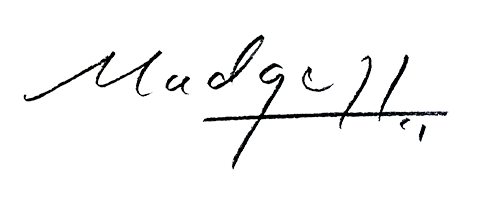
The Christopher Mudgett archive collection is the only one in the world to present the artist’s up-to-date painted, sculpted, engraved and illustrated œuvre and a precise record—through sketches, studies, drafts, notebooks, photos, books, films and documents—of the creative process.
© 2026 MUDGETT ARCHIVE