
Wave of the Future
As a painter, I’ve come to understand that trying to conform to the expectations of previous generations of curators, critics, and collectors can quietly distance an artist from their own voice. Their standards were shaped by the cultural moment they lived through, just as every movement in art has belonged to its own time. Painting has always evolved this way, one era embracing restraint, another returning to emotion, abstraction, disruption, or experimentation. What was once dismissed as radical often becomes celebrated later, not because the work changed, but because the world eventually caught up to it. Art moves in waves, and with every new generation comes a different way of seeing, collecting, and understanding creative expression.
I don’t see painting as a contest for approval from the past, but as part of an ongoing conversation that is constantly reshaping itself. The artists who changed history were rarely embraced immediately; many challenged the tastes and conventions of their time simply by remaining faithful to their vision. That is the responsibility of any artist—to create work that feels alive and honest to the present moment, even when it unsettles established expectations. Every brushstroke becomes less about fitting into inherited definitions of what art should be and more about contributing something necessary to what art could become.
There is freedom in creating with the future in mind rather than seeking validation from tradition. The work I make is not intended to live comfortably within old frameworks, but to exist as part of the next movement, the next shift in perspective, the next tide coming in. New collectors, curators, and audiences will inevitably emerge, bringing with them a hunger for work that reflects their own era and emotional landscape. Painting has never stood still, and neither should the artist. The goal is not to fit neatly into history, but to help shape what comes next.
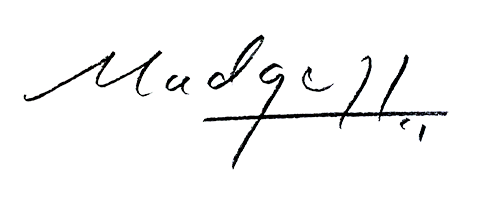
The Christopher Mudgett archive collection is the only one in the world to present the artist’s up-to-date painted, sculpted, engraved and illustrated œuvre and a precise record—through sketches, studies, drafts, notebooks, photos, books, films and documents—of the creative process.
© 2026 MUDGETT ARCHIVE